
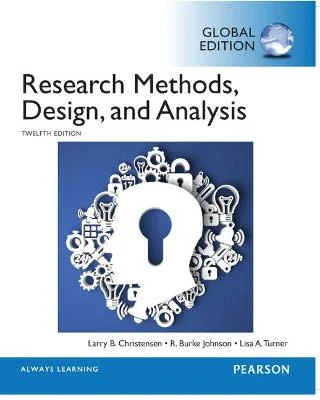
Description
By (author) Christensen Larry; By (author) Johnson R. Burke; By (author) Turner Lisa
Encourages mastery of the basic principles of psychological research Research Methods, Design, and Analysis, 12/e, provides an understanding of the research methods used to investigate human thought and behavior. The coverage of experimental, qualitative, correlational, and survey research helps students develop their research skills for all aspects of psychology. Information is presented in a simple and straightforward manner and placed into context of actual research studies, helping students make real-life connections. MySearchLab is a part of the Christensen / Johnson / Turner program. Research and writing tools, including access to academic journals, help students explore Psychological Research in even greater depth. To provide students with flexibility, students can download the eText to a tablet using the free Pearson eText app. This title is available in a variety of formats and prices – digital and print. Pearson offers its titles on the devices students love through Pearson’s MyLab products, CourseSmart, Amazon, and more.
Table of contents
PART I: IntroductionChapter 1: Introduction to Scientific ResearchChapter 2: Research Approaches and Methods of Data CollectionPART II: Planning the Research StudyChapter 3: Problem Identification and Hypothesis FormationChapter 4: EthicsPART III: Foundations of ResearchChapter 5: Measuring Variables and SamplingChapter 6: Research ValidityPART IV: Experimental MethodsChapter 7: Control Techniques in Experimental ResearchChapter 8: Experimental Research DesignChapter 9: Procedure for Conducting an ExperimentChapter 10:Quasi-Experimental DesignsChapter 11:Single-Case Research DesignsPART V: Survey, Qualitative, and Mixed Methods ResearchChapter 12:Survey ResearchChapter 13:Qualitative and Mixed Methods ResearchPART VI: Analyzing and Interpreting DataChapter 14:Descriptive StatisticsChapter 15:Inferential StatisticsPART VII: Writing the Research ReportChapter 16:Preparing the Research Report for Presentation or Publication
Feature
Thoroughly Covers Basic Principles – Students will learn the basic concepts of psychological research, how to plan a research study, the different kinds of psychological research, how to analyze and interpret data, and how to write their own research report.Supports Student Learning – Concept Maps and Learning Objectives at the beginning of each chapter highlight key content for readers. Study questions throughout each chapter help students review material right after they have finished reading about it.Practice Tests at the end of each chapter allow students to assess their knowledge of the chapter material.Explores Research – The text presents research in a critical, creative way that students will not only understand, but be able to apply to real-world experiences. Challenge Exercises at the end of each chapter expose students to the activities required in the conduct of research study and ensure they are learning the skills they need to perform real-life psychological research.
New feature
Chapter 4:Updated ethical principles to match new APA guidelinesChapter 8:New material on mixed experimental research designsNew internal validity table modeled on classic work by Campbell and StanleyChapter 10:New table: Summary of Threats to Internal Validity for Quasi-Experimental Designs.Chapter 13:New section on Research Validity in Mixed Methods Research.



Reviews
There are no reviews yet.