
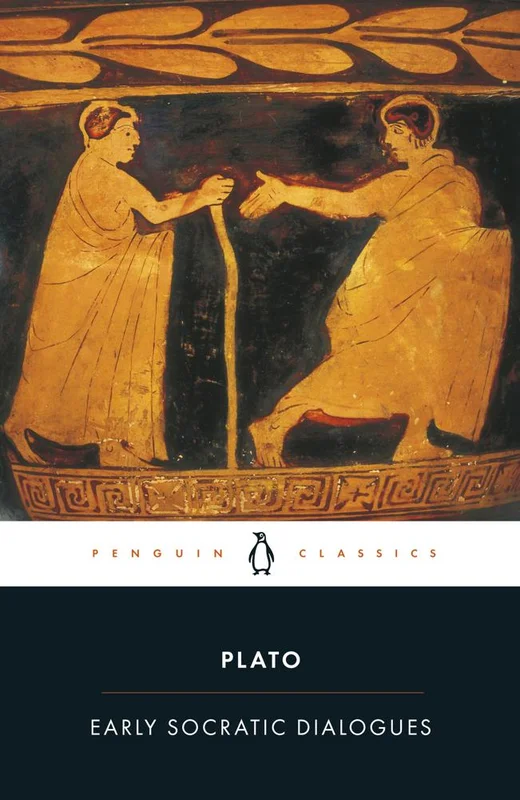
Description
By (author) Plato; By (author) Chris, Emlyn-Jones; By (author) Plato; Edited by Saunders, Trevor; Introduction by Saunders, Trevor; Translated by Saunders, Trevor
Short /annotation:
Rich in drama and humour, they include the controversial Ion, a debate on poetic inspiration; Laches, in which Socrates seeks to define bravery; and Euthydemus, which considers the relationship between philosophy and politics.
:
Rich in drama and humour, they include the controversial Ion, a debate on poetic inspiration; Laches, in which Socrates seeks to define bravery; and Euthydemus, which considers the relationship between philosophy and politics. Together, these dialogues provide a definitive portrait of the real Socrates and raise issues still keenly debated by philosophers, forming an incisive overview of Plato”s philosophy.
Biographical note:
As the father of Western philosophy, who transformed Greek thought with his questioning insights into life and ethics, Socrates (470-399 bc) was a powerful inspiration – and major irritant – to the Athenians of his day. After his trial and execution on charges of heresy and the corruption of young minds, his greatest pupil Plato (c. 427-347 bc) wrote these early dialogues as an act of homage.
Chris Emlyn-Jones teaches in the department of Classical Studies at the Open University.
Reviews
There are no reviews yet.