
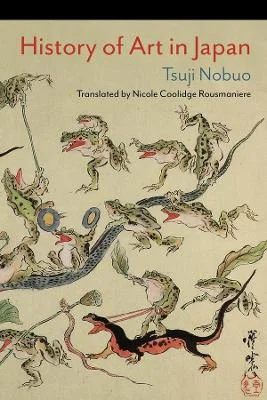
Description
Translated by Rousmaniere, Nicole Coolidge; By (author) Tsuji, Nobuo
Short /annotation:
In this book the leading authority on Japanese art history sheds light on how Japan has nurtured distinctive aesthetics, prominent artists, and movements that have achieved global influence and popularity. The History of Art in Japan discusses works ranging from earthenware figurines in 13,000 BCE to manga, anime, and modern subcultures.
:
History of Art in Japan is a fully illustrated overview of Japanese art, written by one of Japan’s most distinguished art historians. This masterful account of the country’s exceptional cultural heritage sheds light on how Japan has nurtured distinctive aesthetics, prominent artists, and movements that have achieved global influence and popularity.
A leading authority on Japanese art history, Tsuji Nobuo discusses works ranging from the Jōmon period to contemporary art, from earthenware figurines in 13,000 BCE to manga, anime, and modern subcultures. He explains crucial aspects of Japan’s many artistic mediums and styles—including paintings, ukiyo-e, ceramics, sculpture, armor, gardens, and architecture—covering thousands of years. Drawing on newly discovered archaeological findings and the latest research, the book examines Japanese art in various contexts, including Buddhist and religious influences, aristocratic and popular aesthetics, and interactions with the world. Generously illustrated with hundreds of full-color images, maps, and figures, History of Art in Japan is an indispensable resource for all those interested in this multifaceted history, illuminating countless aspects of Japanese art for scholars and general readers alike.
Table of contents:
Preface to the English Edition
Translator’s Preface
Nengō Era Chart
Map of Archaeological Sites
Timelines
Introduction
1. Jōmon: The Force of Primal Imagination
2. Yayoi and Kofun: Influences from the Continent
3. Asuka and Hakuhō: The Sphere of East Asian Buddhist Arts
4. Nara: The Spread of the Tang International Style
5. Heian: Jōgan, Fujiwara, and Insei Art
6. Kamakura Period: Aristocratic Aesthetics in Flux
7. Nanbokuchō and Muromachi: Zen Buddhism and Chinese Art
8. Azuchi-Momoyama: The Flowering of Kazari
9. Edo: Townspeople and the Rise of Urban Culture
10. Meiji to Heisei: Modern and Contemporary Art
Notes
Recommended Reading for Further Study
Image Credits
Index
Review quote:
Tsuji Nobuo’s encyclopedic, authoritative, and insightful survey of the history of Japanese art—informed by over six decades of groundbreaking research—is presented in a lively and eminently readable translation by Nicole Coolidge Rousmaniere, his trusted colleague and an expert on Japanese culture in her own right.
Review quote:
The appearance of Professor Tsuji Nobuo’s history of Japanese art in an English edition is a watershed moment both for the field and for the discipline of art history as a whole. The most important Japanese art historian of his generation, Tsuji weaves a narrative covering millennia of art in the archipelago by intertwining themes and concepts he has long championed, such as the roles of the decorative, playfulness, and eccentricity, all of which serve to liberate the arts of Japan from standard tropes of style, form, and iconography that have dominated western art historical discourse. Balanced, extensive attention devoted both to the prehistoric Jōmon, Yayoi, and Kofun periods as well as to the modern era take his book far beyond the parameters of previous survey texts, and highlights the dynamism, imagination, and visual spectacle of Japanese art. In this beautifully illustrated volume Professor Tsuji brings home the point that from wooden Buddhist sculptures to “Superflat,” it is in the startling vis




Reviews
There are no reviews yet.