
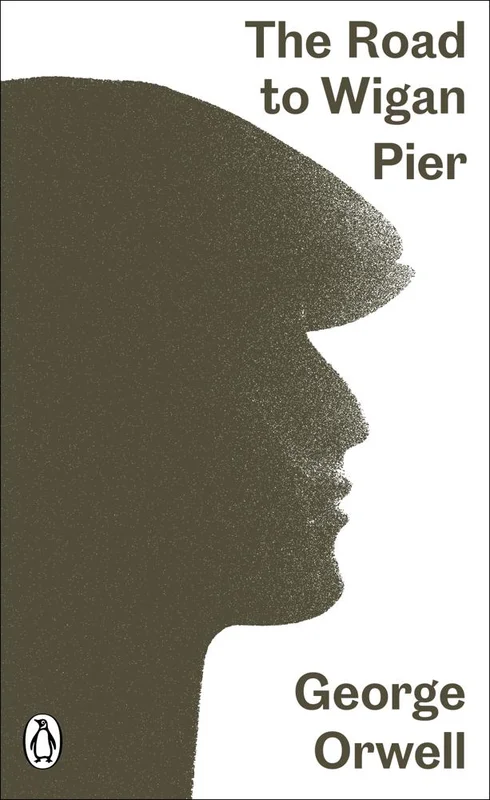
Description
By (author) George Orwell; By (author) Orwell, George
Short /annotation:
Features observations of working-class life in the bleak industrial heartlands of Yorkshire and Lancashire in the 1930s. This title provides s of social injustice, cramped slum housing, dangerous mining conditions, squalor, hunger and growing unemployment and more.
:
Asearing account of George Orwell”s observations of working-class lifein the bleak industrial heartlands of Yorkshire and Lancashire in the1930s, The Road to Wigan Pier is a brilliant and bitter polemicthat has lost none of its political impact over time. His graphicallyunforgettable s of social injustice, cramped slum housing,dangerous mining conditions, squalor, hunger and growing unemploymentare written with unblinking honesty, fury and great humanity. Itcrystallized the ideas that would be found in Orwell”s later works andnovels, and remains a powerful portrait of poverty, injustice and classdivisions in Britain.
Published with an introduction by Richard Hoggart in Penguin Modern Classics.
”Itis easy to see why the book created and still creates so sharp animpact … exceptional immediacy, freshness and vigour, opinionated andbold … Above all, it is a study of poverty and, behind that, of thestrength of class-divisions”
Richard Hoggart
Review quote:
True genius … all his anger and frustration found their first proper means of expression in Wigan Pier
Biographical note:
Eric Arthur Blair (1903-1950), better known by his pen-name, George Orwell, was born in India, where his father worked for the Civil Service. An author and journalist, Orwell was one of the most prominent and influential figures in twentieth-century literature. His unique political allegory Animal Farm was published in 1945, and it was this novel, together with the dystopia of Nineteen Eighty-Four (1949), which brought him world-wide fame. His novels and non-fiction include Burmese Days, Down and Out in Paris and London, The Road to Wigan Pier and Homage to Catalonia.
Promotional headline:
”We are mistaken when we say that ”It isn”t the same for them as it would be for us”, and that people bred in the slums can imagine nothing but the slums. For what I saw on her face was not the ignorant suffering of an animal.




Reviews
There are no reviews yet.